
Does Landscaping Add Value to Your Home? An Australian Guide
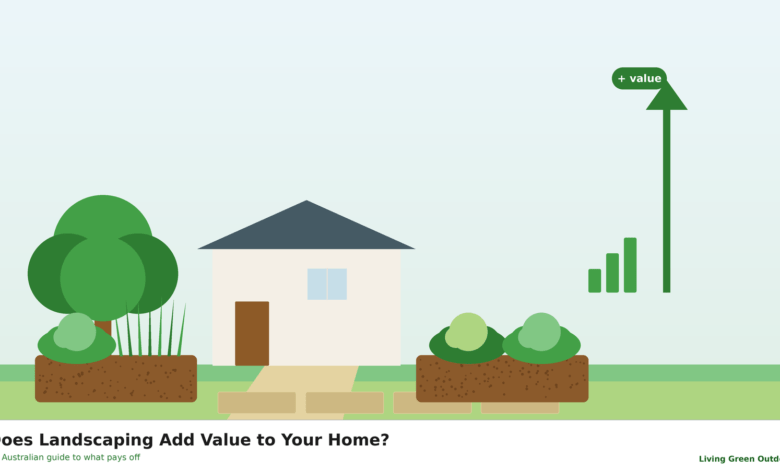
Short answer: yes, usually, and sometimes a lot. But the longer answer is more useful, because not all landscaping pays its way, and a few thousand dollars spent in the wrong spot can disappear without lifting your sale price at all.
If you are weighing up whether to invest in the garden before selling, or just wondering whether it is worth doing for the long haul, here is how it actually plays out in the Australian market.
What the numbers tend to show
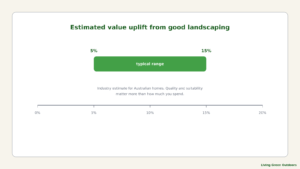
Industry estimates in Australia generally put well-considered landscaping at adding somewhere between 5 and 15 per cent to a property’s value. On a Sydney home, that is not small change. The figure depends heavily on the quality of the work and how well it suits the house and the buyer pool in that suburb.
The catch is the word “well-considered”. A tidy, established, low-maintenance garden adds value. A half-finished project, an overgrown jungle, or a design that fights the style of the house can actually put buyers off. Landscaping is one of the few renovations where doing it badly is worse than not doing it at all.
It is also worth knowing that the percentage is not the whole story. The same garden lifts a family home in a leafy suburb more than it lifts a unit aimed at first-home buyers, because the buyer pools want different things. Read who buys in your street before you decide what to spend.
Kerb appeal does a lot of quiet work
First impressions are formed before a buyer is through the front gate. The front yard sets the tone for everything they see afterwards. A clean lawn, defined garden beds, a clear path to the door and a couple of established plants tell a buyer the place has been cared for.
That impression carries inside. Buyers who pull up to a scruffy front yard walk in already looking for problems. The same house behind a neat garden gets the benefit of the doubt. You are not just selling plants, you are selling the idea that the whole property has been looked after.
The projects that tend to pay off
Some landscaping spends recover their cost at sale, and some do better than that. The reliable performers are usually the ones that improve how the property lives, not just how it looks.
- A functional outdoor entertaining area, paving or a deck that extends the living space. Australians sell the lifestyle, and an inviting outdoor room is a strong selling point.
- Established, low-maintenance planting. Buyers value a garden that looks good without being a second job. Mature plants also read as “settled” rather than freshly slapped together for the sale.
- Good lawn and clean edges. Boring, but a healthy lawn with crisp edges is one of the cheapest ways to lift the whole look.
- Privacy screening. A well-placed hedge or screen that blocks a neighbour’s window adds real liveability, and buyers feel it instantly.
What is less likely to return your money
High-maintenance and very personal features are the risky ones. A koi pond, an elaborate water feature, a sprawling veggie garden or a heavily themed design might be exactly what you want, but the next buyer sees a maintenance bill or something they will rip out. Spend on those for your own enjoyment, not as an investment.
Estimated value uplift from good landscaping (industry estimate).
Over-capitalising is the other trap. There is a ceiling on what any street will pay, and a luxury garden on a modest home in a modest suburb will not lift the price past what the area supports. Match the spend to the property and the postcode.
What buyers actually notice
Talk to any agent and the same things come up. Buyers walk into a backyard and picture themselves using it. They look for somewhere to sit, somewhere for the kids or the dog, and whether the space feels private. They are not counting plant species, they are asking a quiet question: could we live here and enjoy it?
That is why a simple, functional garden often beats an elaborate one at sale time. A clear entertaining area, a healthy lawn, a bit of screening and tidy beds answer that question with a yes. A complicated garden full of features the buyer did not ask for tends to read as work waiting to happen, even when it cost a fortune.
What it costs versus what it returns
The maths only works if you know both halves of it. Before you decide whether landscaping is worth it for your sale, get a realistic sense of landscaping costs in Sydney for the kind of work you have in mind. A modest tidy-up and replant sits at a very different price point to a full backyard transformation with paving and retaining walls, and the return on each is different too.
If you are renovating to sell, the smart move is usually the high-impact, lower-cost end: clean up, define the beds, fix the lawn, add a few established plants, sort the entry. For a more involved job, the team at Living Green Outdoors can help you work out where your budget will do the most for the sale price rather than vanishing into features buyers do not pay for.
Timing it before a sale
If you are landscaping specifically to sell, give the garden time to settle before the photos and the first inspection. Freshly planted beds look thin and raw, and mulch that went down yesterday reads as a last-minute scramble rather than a cared-for garden. A few weeks to a couple of months lets plants establish and the whole thing look lived-in.
Lawn especially needs lead time. A patchy lawn cannot be fixed the week before you list. If the grass is the weak point, sort it early so it is thick and green by the time buyers turn up, because nothing reads “neglected” faster than bare, weedy turf in a listing photo.
If you are staying, not selling
The value question changes when you are not about to sell. A good garden you use every day pays you back in liveability, in lower energy bills from shade trees, and in the simple fact that you actually enjoy being out there. That value does not show up in a price guide, but it is real, and it compounds over the years you live with it.
Either way, the quality of the work matters more than the size of the budget. A modest garden done well beats an ambitious one done badly every time. If you want it to add value rather than questions, it is worth getting the quality landscaping work right from the start.
So, is it worth it?
For most Australian homes, yes. Landscaping is one of the better-returning improvements you can make, as long as you aim for tidy, functional and suited to the property rather than expensive and personal. Spend where buyers feel it, skip what they will only see as upkeep, and match the budget to the street. Done that way, a garden earns its keep whether you sell next year or stay for twenty.
You can also read about: Choosing The Best End-of-Lease Cleaning Sydney Service Provider